The pitch is seductive in its simplicity: generate AI videos, post them to a faceless channel, collect ad revenue, never appear on camera, scale to a dozen channels. A content factory with no humans in it. The reality is that these channels get demonetized in weeks, sometimes days, the platform's algorithm buries them on sight, viewers are already exhausted by the genre, and there is no brand, no audience, and no loyalty at the end of it.
It is easy to file this under "bad business model" and move on. But it is worth a second look, because the reason it fails is the same reason a certain kind of AI system fails in production. Faceless AI channels are what happens when you ship generated output with no quality bar. They are eval-free production, at scale, and the result has a name now: slop.
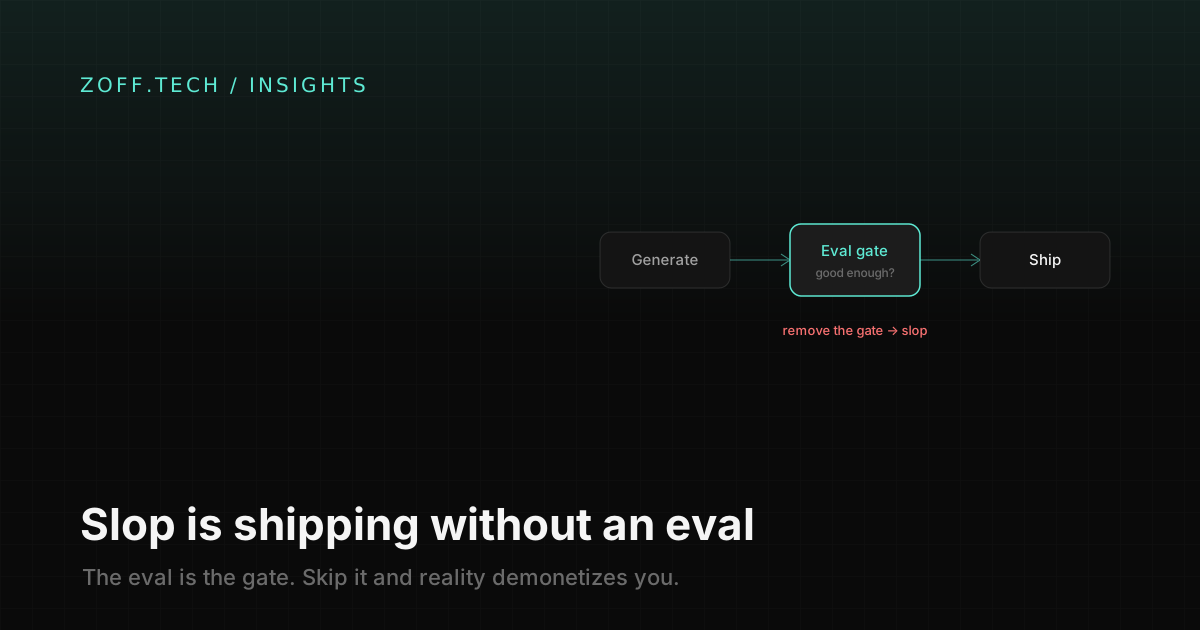
Slop is the absence of a gate
"AI slop" is not really about AI. It is about volume without a quality gate. The faceless-channel playbook is to maximize output and let the platform sort it out — produce a hundred videos, post them all, see what sticks. There is no step where anything checks whether a given piece is good before it goes out. The model generates, the pipeline publishes. Nothing stands between the two.
That missing step is the eval. And its absence is exactly why the model fails. The platform's ranking system is a quality gate — an adversarial one, getting better every month at detecting low-effort generated content — and the faceless channel has voluntarily removed its own gate and walked into someone else's. Of course it loses. It brought volume to a quality fight.
The same failure, in a system you would actually build
Now move the same shape into production software, because this is where it stops being someone else's problem.
A team wires an agent to generate output — support replies, document summaries, code, marketing variants — and ships it on the strength of a good demo. There is no eval set. Nothing checks, before the output reaches a user, whether it is correct, grounded, safe, or even on-topic. The model generates, the system delivers. Nothing stands between the two.
This works in the demo for the same reason the first ten faceless videos look fine: the happy path is forgiving. Then production arrives — real inputs, adversarial inputs, the long weird tail — and the ungated system starts emitting confident, plausible, wrong output to real users. It is the same slop, with higher stakes. Instead of a demonetized channel you get a silent regression that leaked across tenants, a support bot inventing policy, an agent taking an action no one would have approved.
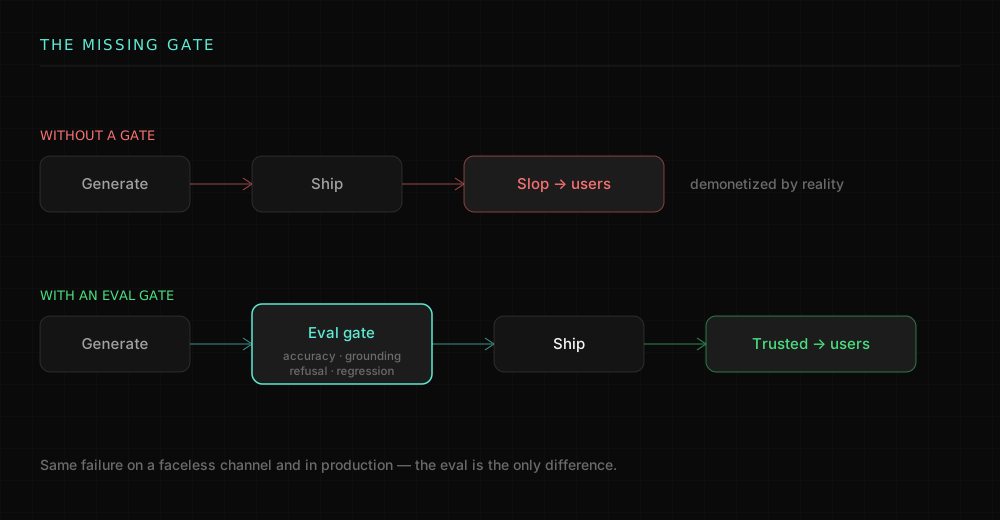
The eval is the gate that the faceless channel skipped and that the production system cannot afford to. It is the thing that checks output against a standard before it ships — accuracy, grounding, refusal behavior, regression catch — and separates what is good enough to send from what is not. We build that harness first, because it is the difference between a system and a slop machine that happens to compile.
Quality is a gate, not a hope
There is a real skill hiding inside the faceless-channel grift, and it is worth separating out: learning to generate genuinely good AI content is valuable, for your own brand or a client's. The skill is not the problem. The model — high volume, no gate, hope the platform doesn't notice — is the problem.
The same is true for every AI system. Generation is cheap and getting cheaper. The model will happily produce infinite output, and most of it, ungated, is slop. The entire value is in the gate: the thing that decides what is good enough to reach a human. A team that treats quality as a hope ships slop and gets demonetized by reality. A team that treats quality as a gate — an eval, run before anything ships, owned by the team — ships systems people trust.
Faceless channels just make the failure mode visible early: maximum output, no quality bar, sorted by someone else's adversarial gate. The general lesson is the same everywhere generated output ships without being checked first. The eval is the gate. Skip it on a YouTube channel and you get demonetized. Skip it in production and you get slop in front of customers — which is the more expensive way to learn it.