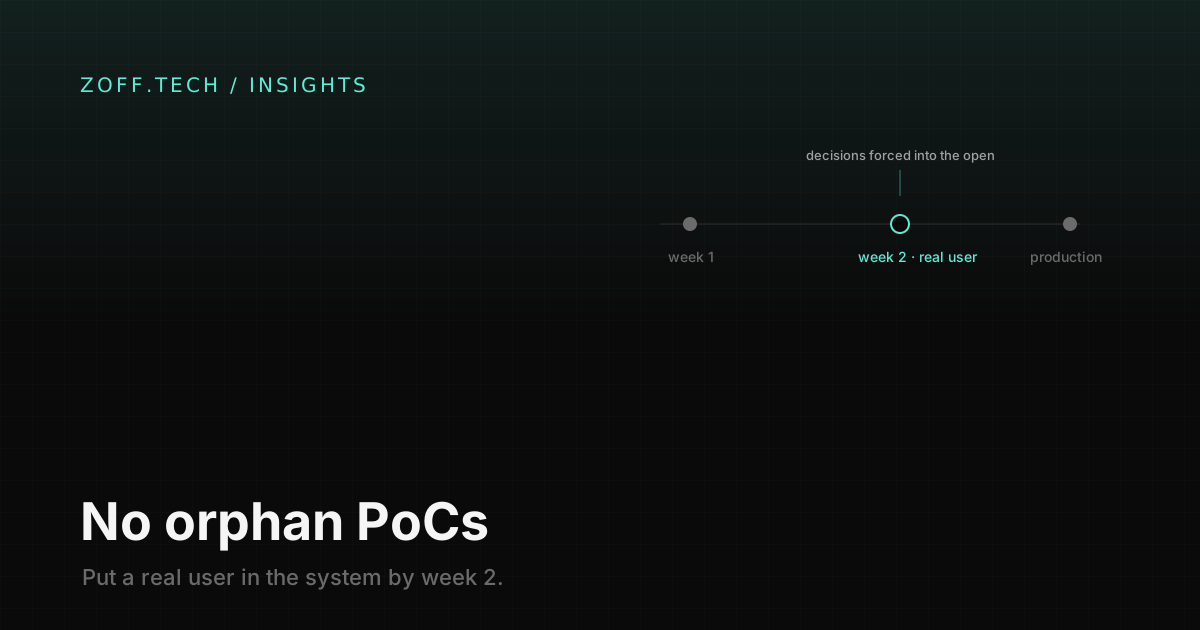
A proof of concept is useful only when it proves the next production decision. Most do not. They prove that a model can do something interesting in a narrow demo path, then leave the team with no operating owner, no release gate, and no evidence that a real user would trust the workflow.
The fix is not a longer PoC. The fix is a real user in the system by week 2.
The week-2 user changes the architecture
When a real user touches the system early, the conversation changes from "can the model do it?" to "can this workflow survive our actual constraints?"
That is where the useful product decisions show up:
- Which step still needs human approval.
- Which generated output needs a citation, edit trail, or refusal path.
- Which field must be structured because downstream systems depend on it.
- Which latency budget matters because the user is waiting in the flow.
- Which failure is embarrassing, and which failure is unacceptable.
Those calls are architecture decisions. They should not wait for launch week.
The autonomous-agent trap
The most seductive AI demo is the one-button flow: upload the thing, get the finished thing back. It is also where teams most often remove the human who makes the output defensible.
For sales responses, security questionnaires, legal workflows, clinical workflows, finance operations, and internal approvals, the product is not the agent. The product is the review path around the agent: who can approve, who can edit, who can escalate, what gets logged, and what cannot leave the system.
If that review path is not in the PoC, the PoC is avoiding the real product.
What we require before a build continues
By the end of discovery, we want three things in writing:
- The first real user and the workflow they will test.
- The eval cases that block a release.
- The operating decision we expect to learn before week 3.
If those cannot be named, the project is not ready for a build. Stopping there is cheaper than shipping a demo that nobody can operate.