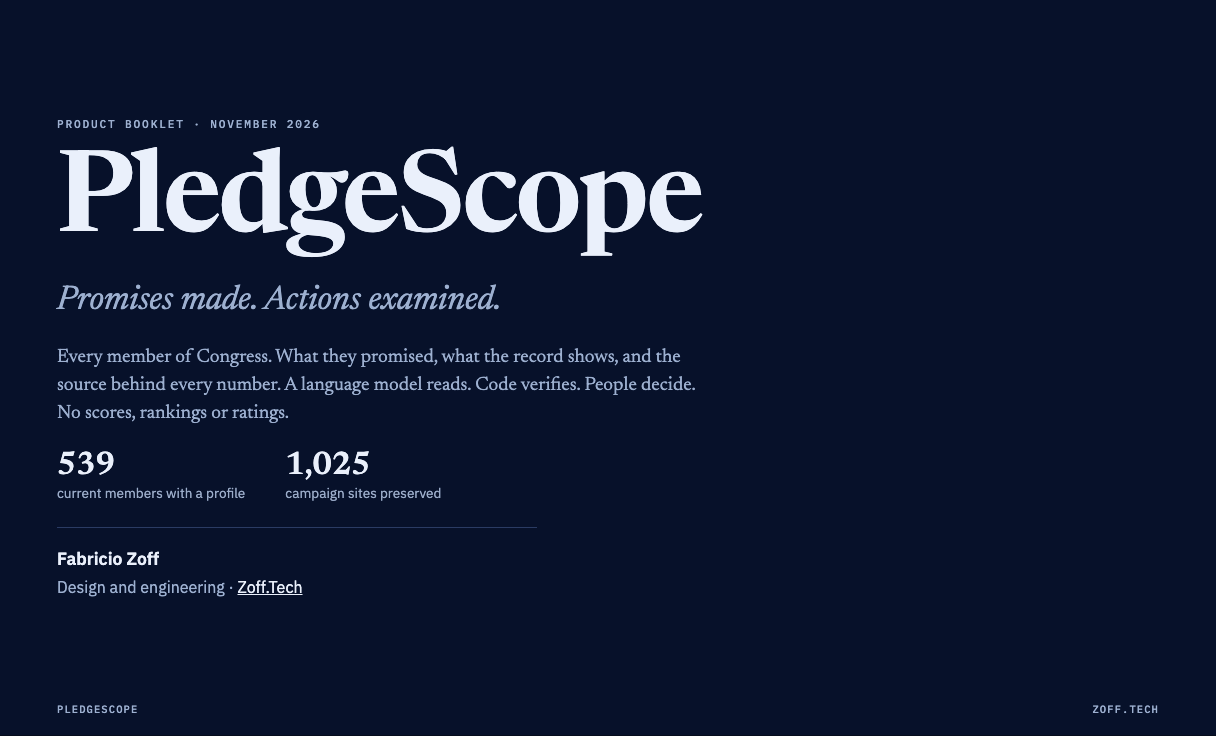
I built a site that puts what each member of Congress promised next to what the public record shows. No scores, no rankings, no ratings. It covers all 539 current members and preserves 1,025 campaign sites as they looked before election day. I wrote a ten-page product booklet about it, and this post is the short version. The booklet itself is online, en español, and as a PDF.
Why I built this
A campaign site, Congress.gov, the House Clerk, the FEC. Each holds part of a member's story in its own format. Few people put them side by side, and the tools that try usually end in a score. I wanted a page per member where the record speaks for itself and nothing gets rated.
I also wanted to use a language model without letting it decide anything. It reads pages and proposes. Code checks every quote against the preserved source. A person approves, assesses and publishes. The model never writes to the public site.
Three rules shaped every page. Describe, do not characterize: counts, quotes and dates, no "liar", no "hero". Absence of evidence is not a verdict: "no action found" says what was searched. The same method for every member: both parties, both chambers, one rulebook, published.
What a reader gets
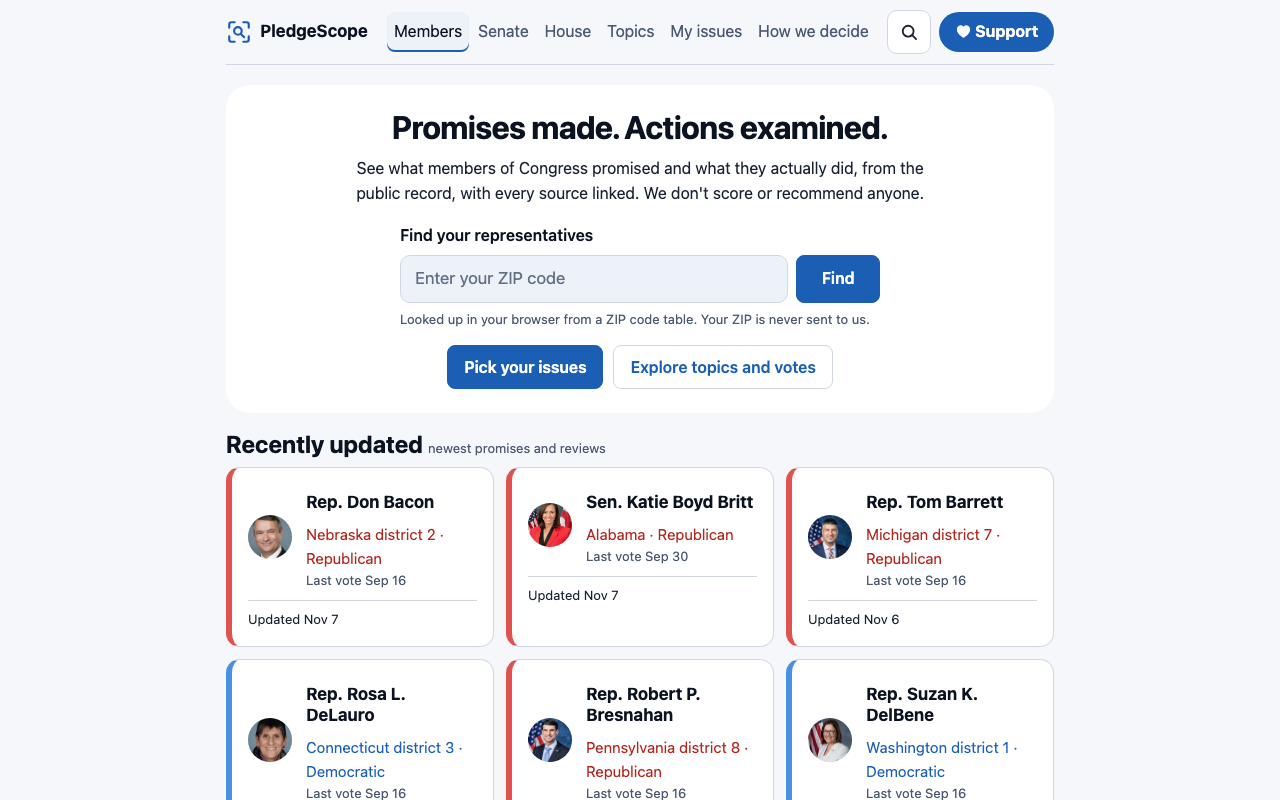
You start with your ZIP code and end at a source. The ZIP lookup runs in the browser from a static table, so your ZIP is never sent anywhere. You can mark where you stand on a set of issues and see how your members voted on each one; the stances stay in your browser too. Every roll call shows the counts by party, a plain-language label, and who broke with their party. Every number links to Congress.gov, the House Clerk, senate.gov or the FEC. If it cannot be sourced, it is left out. A corrections form sits on every profile, and fixes appear in a dated public change log.
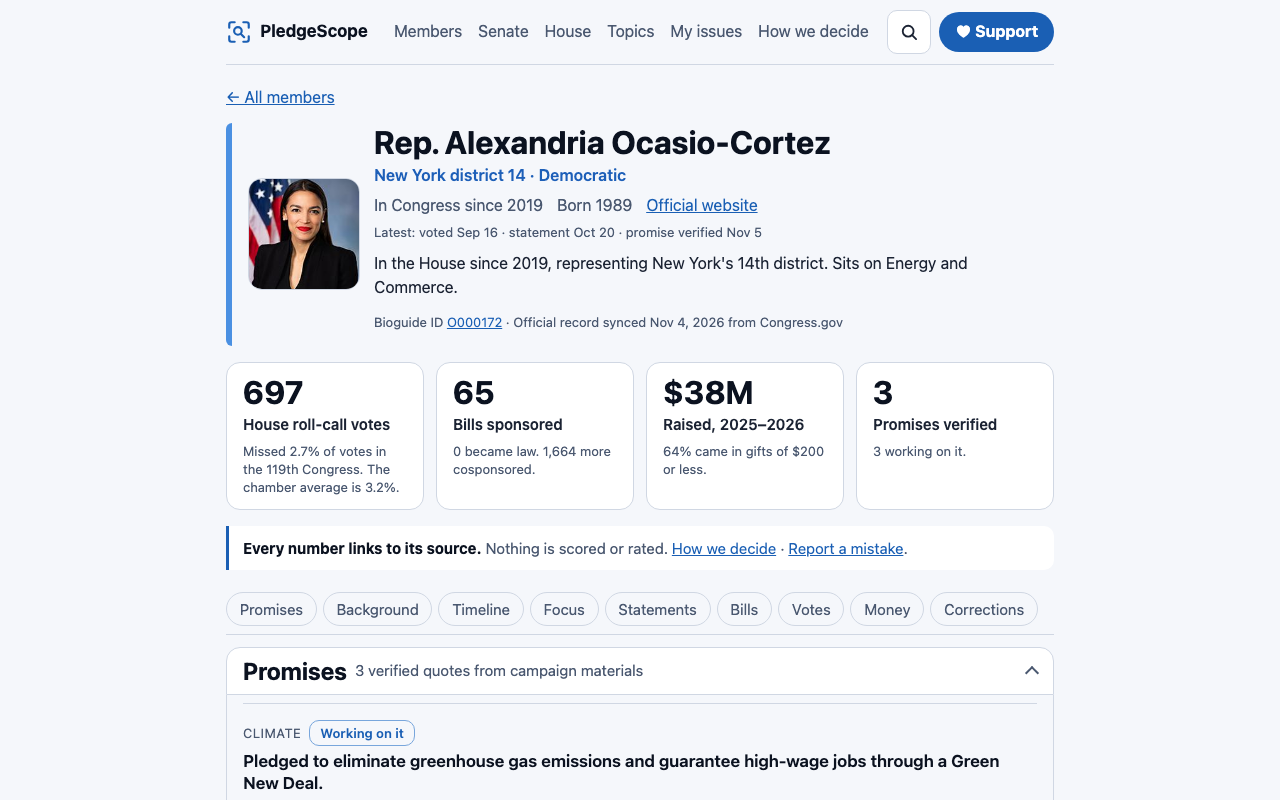
The member profile puts the record first and the promises beside it. Roll-call votes with missed-vote and party-agreement rates against the chamber average. Bills sponsored and cosponsored across the career. Receipts, gift sizes, top listed employers and outside spending from FEC filings, described and never interpreted. Dated press releases. And exact quotes from the member's own campaign site as archived before election day, each with a status and the records behind it.
How a promise is checked
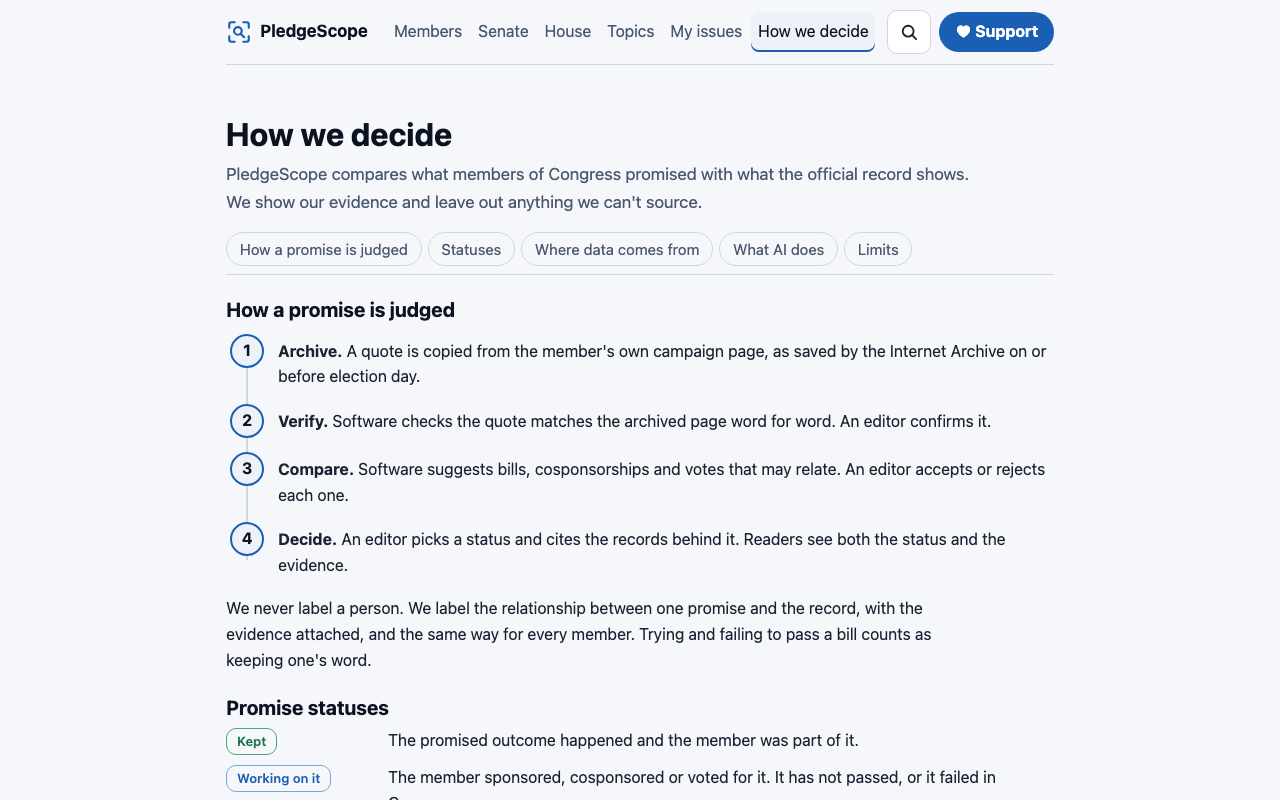
The pipeline has three lanes, and the boundaries between them are the whole design.
Code, deterministic and tested. It fetches the campaign page as the Internet Archive saved it before election day and stores the bytes with a hash. It checks every returned quote against that text; anything not found verbatim is thrown out. It publishes only through a database that refuses without a recorded approval.
Model, one bounded call. Gemini reads the page text and returns up to twelve exact quotes, each with a neutral summary and a topic. Later it gets a closed list of the member's bills and votes dated after the promise and says which relate. It never chooses what to read and has no write path.
Person, signed in and on the record. An editor accepts or rejects each suggested record, picks a status, writes a rationale and attaches evidence. Every transition is logged under the editor's identity. Nothing is stored until the editor saves it as their own.
Five statuses, none of them about the person
| Status | Meaning | Evidence |
|---|---|---|
| Kept | The promised outcome happened and the member was part of it. | Required |
| Working on it | Sponsored, cosponsored or voted for it. Not passed, or it failed. | Recommended |
| No action found | Nothing related found in bills, cosponsorships or votes. | Not required |
| Contradicted | Voted against it, or sponsored the opposite. | Required |
| Reversed position | Later said the opposite on the record. | Required |
Trying and failing counts as keeping your word. A bill that dies in committee is still a bill the member put their name to. "No action found" is not a verdict; it says what was searched and found nothing, and the search is listed. There is no "liar" or "hypocrite" status, because those describe a person. These five describe a promise against a record, with the records attached.
Guardrails that hold even if the prompt is wrong
Prompts drift. Models get swapped. The guardrails are the part I would keep if I had to throw everything else away.
- Verbatim check. A quote that is not in the preserved page, character for character after whitespace, is rejected and logged. An invented or paraphrased quote cannot enter the review queue.
- Immutable snapshots. Every source page and API response is stored as retrieved, with a SHA-256 hash and timestamp. Database triggers refuse edits and deletes.
- Publish guard in the database. A row cannot reach the published state without a recorded human approval and at least one https evidence link. Application code cannot bypass it.
- Append-only assessments. A new assessment adds a version. The previous one stays. Every transition records who, when and why.
- Stripped public documents. Public data carries no model name, editor identity, internal note or stored page copy. Readers' stances and ZIP codes never leave their browser.
- Evidence pack. For any promise an editor can export the quote, the preserved page with its stored and recomputed hash, a fresh quote check, the review history and every assessment.
There are agents. None of them can publish.
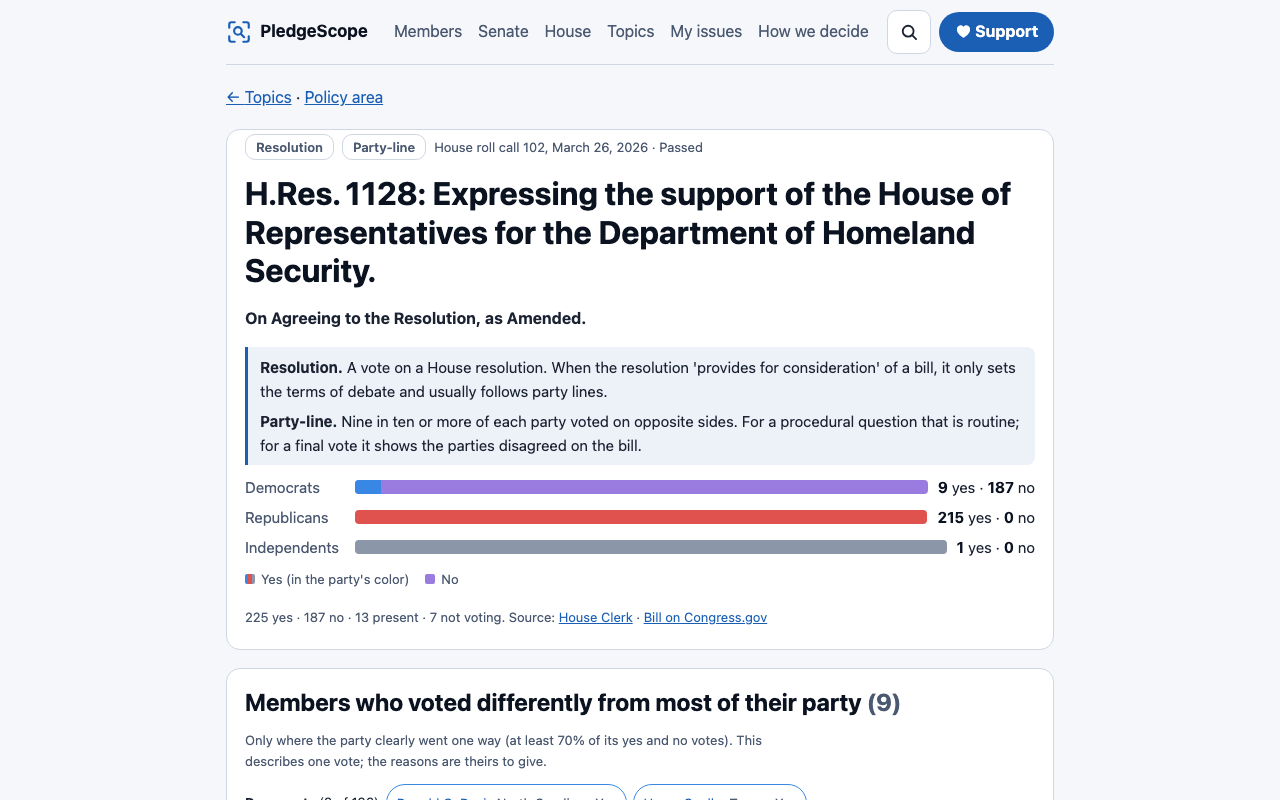
More than twenty scheduled workers keep the record current: votes hourly, Senate roll calls daily, campaign finance and press releases on their own cadences. Each one writes to a review queue or to the immutable evidence store. None has a path to the published tables. That is the same line I draw in every agent build I do for clients: the model proposes, code verifies, and the commit is a human act the system can prove happened.
Where it stands
PledgeScope is live at pledgescope.web.app. The booklet goes into more depth on each page above, with the screens next to the text. If you are building something where an agent touches records a person will be held to, read the guardrails page first; it is the one I would have wanted a year ago.